
Christianity, Current events, doctrine, faith, Human Right, Theology, Uncategorized

Four Leadership Positions of Christ

This week’s article is on four distinct areas of ancient Israel and the transfer of those functions to Jesus Christ. John 1:1-14 already tell us that Jesus is God.

In the beginning was the Word, and the Word was with God, and the Word was God.   The same was in the beginning with God.   All things were made by him; and without him was not any thing made that was made.   In him was life; and the life was the light of men.   And the light shineth in darkness; and the darkness comprehended it not. There was a man sent from God, whose name was John.   The same came for a witness, to bear witness of the Light, that all men through him might believe.   He was not that Light, but was sent to bear witness of that Light.   That was the true Light, which lighteth every man that cometh into the world.   He was in the world, and the world was made by him, and the world knew him not.   He came unto his own, and his own received him not.   But as many as received him, to them gave he power to become the sons of God, even to them that believe on his name:   Which were born, not of blood, nor of the will of the flesh, nor of the will of man, but of God.  And the Word was made flesh, and dwelt among us, (and we beheld his glory, the glory as of the only begotten of the Father,) full of grace and truth. (John 1:1-14)

Now, during the phases of Faith and Government of ancient Israel, we see each position of ancient Israel’s leadership in Christ.

First was the priesthood. We see this foreshadowed in Genesis after Abraham rescued his people that had been taken captive.And Melchizedek king of Salem brought forth bread and wine: and he was the priest of the most high God’. (Genesis 14:18) Remember this because it will appear later. Then after the Exodus, Aaron the Levite (Tribe of Levi) and his lineage become the priestly class, when God alone headed the Israelites. This consecration of Aaron (and his descendants) came after the incident with the golden calf and the giving of God’s law in the Commandments. ‘And the Lord spake unto Moses, saying,   On the first day of the first month shalt thou set up the tabernacle of the tent of the congregation.   And thou shalt put therein the ark of the testimony, and cover the ark with the vail.   And thou shalt bring in the table, and set in order the things that are to be set in order upon it; and thou shalt bring in the candlestick, and light the lamps thereof.   And thou shalt set the altar of gold for the incense before the ark of the testimony, and put the hanging of the door to the tabernacle.   And thou shalt set the altar of the burnt offering before the door of the tabernacle of the tent of the congregation.   And thou shalt set the laver between the tent of the congregation and the altar, and shalt put water therein.   And thou shalt set up the court round about, and hang up the hanging at the court gate.   And thou shalt take the anointing oil, and anoint the tabernacle, and all that is therein, and shalt hallow it, and all the vessels thereof: and it shall be holy.   And thou shalt anoint the altar of the burnt offering, and all his vessels, and sanctify the altar: and it shall be an altar most holy.   And thou shalt anoint the laver and his foot, and sanctify it.   And thou shalt bring Aaron and his sons unto the door of the tabernacle of the congregation, and wash them with water.   And thou shalt put upon Aaron the holy garments, and anoint him, and sanctify him; that he may minister unto me in the priest’s office’. (Exodus 40:1-13)

Second were the judges. These were a few individuals that then led the Israelites. We are given a few names and Samson being one of the most remembered. And there was a female in the group as well. Not that women hold a position of leadership in the church, they were used by God for specific purposes. For a period of 40 years (from Joshua to the time of the first king), Judges were either military leaders or advisors.Nevertheless the Lord raised up judges, which delivered them out of the hand of those that spoiled them’. (Judges 2:16)

Third were the Kings. Israel looked around and saw that the other nations had a king to guide them. They wanted to be as other nations (to their detriment) and not be ruled  solely by God or guided by the judges. And Samuel called the people together unto the Lord to Mizpeh;   And said unto the children of Israel, Thus saith the Lord God of Israel, I brought up Israel out of Egypt, and delivered you out of the hand of the Egyptians, and out of the hand of all kingdoms, and of them that oppressed you:   And ye have this day rejected your God, who himself saved you out of all your adversities and your tribulations; and ye have said unto him, Nay, but set a king over us. Now therefore present yourselves before the Lord by your tribes, and by your thousands’. (1 Samuel 10:17-19)And Saul was set as the first King of Israel. And the people said unto Samuel, Who is he that said, Shall Saul reign over us? bring the men, that we may put them to death.   And Saul said, There shall not a man be put to death this day: for to day the Lord hath wrought salvation in Israel.   Then said Samuel to the people, Come, and let us go to Gilgal, and renew the kingdom there.   And all the people went to Gilgal; and there they made Saul king before the Lord in Gilgal; and there they sacrificed sacrifices of peace offerings before the Lord; and there Saul and all the men of Israel rejoiced greatly’. (1 Samuel 11:12-15)

Fourth were the prophets. These extend through the ages of all of the history of Israel. Moses being the first of the Old Testament prophets and John being the last of the Old Testament prophets. One must remember that Testament means Covenant. The New Testament (Covenant) did not start with birth of Jesus. It started with the proclamation of the last Old Covenant prophets John.And this is the record of John, when the Jews sent priests and Levites from Jerusalem to ask him, Who art thou?   And he confessed, and denied not; but confessed, I am not the Christ.   And they asked him, What then? Art thou Elias? And he saith, I am not. Art thou that prophet? And he answered, No.   Then said they unto him, Who art thou? that we may give an answer to them that sent us. What sayest thou of thyself?   He said, I am the voice of one crying in the wilderness, Make straight the way of the Lord, as said the prophet Esaias.   And they which were sent were of the Pharisees.   And they asked him, and said unto him, Why baptizest thou then, if thou be not that Christ, nor Elias, neither that prophet?   John answered them, saying, I baptize with water: but there standeth one among you, whom ye know not; He it is, who coming after me is preferred before me, whose shoe’s latchet I am not worthy to unloose. These things were done in Bethabara beyond Jordan, where John was baptizing. 
   The next day
John seeth Jesus coming unto him, and saith, Behold the Lamb of God, which taketh away the sin of the world.   This is he of whom I said, After me cometh a man which is preferred before me: for he was before me.   And I knew him not: but that he should be made manifest to Israel, therefore am I come baptizing with water.   And John bare record, saying, I saw the Spirit descending from heaven like a dove, and it abode upon him.   And I knew him not: but he that sent me to baptize with water, the same said unto me, Upon whom thou shalt see the Spirit descending, and remaining on him, the same is he which baptizeth with the Holy Ghost.   And I saw, and bare record that this is the Son of God’. (John 1:19-34) Jesus himself was the only prophet of the New Testament (Covenant). His prophecies came through various parts of His teachings. Most were of His death and resurrection Then answered the Jews and said unto him, What sign shewest thou unto us, seeing that thou doest these things?   Jesus answered and said unto them, Destroy this temple, and in three days I will raise it up.   Then said the Jews, Forty and six years was this temple in building, and wilt thou rear it up in three days?   But he spake of the temple of his body.   When therefore he was risen from the dead, his disciples remembered that he had said this unto them; and they believed the scripture, and the word which Jesus had said’. (John 2:18-22), His placement with the Father and second comingJesus saith unto him, Thou hast said: nevertheless I say unto you, Hereafter shall ye see the Son of man sitting on the right hand of power, and coming in the clouds of heaven’. (Matthew 26:64) “Immediately after the tribulation of those days the sun will be darkened, and the moon will not give its light, and the stars will fall from heaven, and the powers of the heavens will be shaken.  Then will appear in heaven the sign of the Son of Man, and then all the tribes of the earth will mourn, and they will see the Son of Man coming on the clouds of heaven with power and great glory.  And he will send out his angels with a loud trumpet call, and they will gather his elect from the four winds, from one end of heaven to the other’. (Matthew 24:29-31), the issues that His followers will face throughout the agesAs he sat on the Mount of Olives, the disciples came to him privately, saying, “Tell us, when will these things be, and what will be the sign of your coming and of the end of the age?”  And Jesus answered them, “See that no one leads you astray.  For many will come in my name, saying, ‘I am the Christ,’ and they will lead many astray.  And you will hear of wars and rumors of wars. See that you are not alarmed, for this must take place, but the end is not yet.  For nation will rise against nation, and kingdom against kingdom, and there will be famines and earthquakes in various places.  All these are but the beginning of the birth pains. “Then they will deliver you up to tribulation and put you to death, and you will be hated by all nations for my name’s sake.  And then many will fall away and betray one another and hate one another.  And many false prophets will arise and lead many astray.  And because lawlessness will be increased, the love of many will grow cold.  But the one who endures to the end will be saved.  And this gospel of the kingdom will be proclaimed throughout the whole world as a testimony to all nations, and then the end will come. “So when you see the abomination of desolation spoken of by the prophet Daniel, standing in the holy place (let the reader understand),  then let those who are in Judea flee to the mountains.  Let the one who is on the housetop not go down to take what is in his house,  and let the one who is in the field not turn back to take his cloak.  And alas for women who are pregnant and for those who are nursing infants in those days!  Pray that your flight may not be in winter or on a Sabbath.  For then there will be great tribulation, such as has not been from the beginning of the world until now, no, and never will be.  And if those days had not been cut short, no human being would be saved. But for the sake of the elect those days will be cut short.  Then if anyone says to you, ‘Look, here is the Christ!’ or ‘There he is!’ do not believe it.  For false christs and false prophets will arise and perform great signs and wonders, so as to lead astray, if possible, even the elect.  See, I have told you beforehand.  So, if they say to you, ‘Look, he is in the wilderness,’ do not go out. If they say, ‘Look, he is in the inner rooms,’ do not believe it.  For as the lightning comes from the east and shines as far as the west, so will be the coming of the Son of Man.  Wherever the corpse is, there the vultures will gather’. (Matthew 24:3-28) And the whole book of the Revelation of Jesus The Revelation of Jesus Christ, which God gave unto him, to shew unto his servants things which must shortly come to pass; and he sent and signified it by his angel unto his servant John:   Who bare record of the word of God, and of the testimony of Jesus Christ, and of all things that he saw.   Blessed is he that readeth, and they that hear the words of this prophecy, and keep those things which are written therein: for the time is at hand. (Revelation 1:1-3)

So now let us see how Jesus Christ (God on earth) meets all four of these positions of Divine leadership that was seen in earthly leadership.

First, we see the priesthood. Seeing then that we have a great high priest, that is passed into the heavens, Jesus the Son of God, let us hold fast our profession.   For we have not an high priest which cannot be touched with the feeling of our infirmities; but was in all points tempted like as we are, yet without sin.   Let us therefore come boldly unto the throne of grace, that we may obtain mercy, and find grace to help in time of need’. (Hebrews 4:14-16)

And remember I said to remember the priest Melchizedek? There was this reason to remember. For every high priest taken from among men is ordained for men in things pertaining to God, that he may offer both gifts and sacrifices for sins:   Who can have compassion on the ignorant, and on them that are out of the way; for that he himself also is compassed with infirmity.   And by reason hereof he ought, as for the people, so also for himself, to offer for sins.   And no man taketh this honour unto himself, but he that is called of God, as was Aaron. So also Christ glorified not himself to be made an high priest; but he that said unto him, Thou art my Son, to day have I begotten thee. As he saith also in another place, Thou art a priest for ever after the order of Melchisedek.   Who in the days of his flesh, when he had offered up prayers and supplications with strong crying and tears unto him that was able to save him from death, and was heard in that he feared;   Though he were a Son, yet learned he obedience by the things which he suffered;   And being made perfect, he became the author of eternal salvation unto all them that obey him;   Called of God an high priest after the order of Melchisedek’. (Hebrews 5:1-10)

Second, we see Christ as a judge.I charge thee therefore before God, and the Lord Jesus Christ, who shall judge the quick and the dead at his appearing and his kingdom’. (2 Timothy 4:1) ‘And I saw heaven opened, and behold a white horse; and he that sat upon him was called Faithful and True, and in righteousness he doth judge and make war’. (Revelation 19:11)

Third, we see Christ as King. His eyes were as a flame of fire, and on his head were many crowns; and he had a name written, that no man knew, but he himself.   And he was clothed with a vesture dipped in blood: and his name is called The Word of God.   And the armies which were in heaven followed him upon white horses, clothed in fine linen, white and clean.   And out of his mouth goeth a sharp sword, that with it he should smite the nations: and he shall rule them with a rod of iron: and he treadeth the winepress of the fierceness and wrath of Almighty God.   And he hath on his vesture and on his thigh a name written, King of Kings, and Lord of Lords’. (Revelation 19:12-16)

Fourth, we see throughout the four Gospels that He is prophet.

He holds these four positions of leadership because He is God. For those who question this (mostly Muslims, Jews, and some Christian denominations), it states it clearly in various places. Behold, a virgin shall be with child, and shall bring forth a son, and they shall call his name Emmanuel, which being interpreted is, God with us’. (Matthew 1:23) ‘In the beginning was the Word, and the Word was with God, and the Word was God. And the Word was made flesh, and dwelt among us, (and we beheld his glory, the glory as of the only begotten of the Father,) full of grace and truth’. (John 1:1,14)And he was clothed with a vesture dipped in blood: and his name is called The Word of God’. (Revelation 19:13)

The question you need to ask is not ‘Is Jesus God’ or ‘Is He coming back’, because both those answers are YES. But, Are you ready for eternal salvation? And I saw a great white throne, and him that sat on it, from whose face the earth and the heaven fled away; and there was found no place for them.   And I saw the dead, small and great, stand before God; and the books were opened: and another book was opened, which is the book of life: and the dead were judged out of those things which were written in the books, according to their works’. (Revelation 20:11-12)

Believing in Jesus is not enough.Thou believest that there is one God; thou doest well: the devils also believe, and tremble.   But wilt thou know, O vain man, that faith without works is dead?   Was not Abraham our father justified by works, when he had offered Isaac his son upon the altar?  Seest thou how faith wrought with his works, and by works was faith made perfect?   And the scripture was fulfilled which saith, Abraham believed God, and it was imputed unto him for righteousness: and he was called the Friend of God.   Ye see then how that by works a man is justified, and not by faith only’. (James 2:19-24) And we see that the works (commandments of God) have to be alongside faith. ‘And the dragon was wroth with the woman, and went to make war with the remnant of her seed, which keep the commandments of God, and have the testimony of Jesus Christ’. (Revelation 12:17) ‘Here is the patience of the saints: here are they that keep the commandments of God, and the faith of Jesus’. (Revelation 14:12

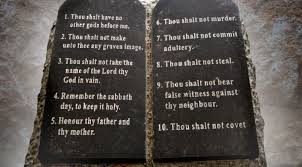
This is not legalism. It is how God told us to relate to Him and others. Even Christ said so when he reminded the Jews of the two sections of the Ten Commandments. ‘But when the Pharisees had heard that he had put the Sadducees to silence, they were gathered together.   Then one of them, which was a lawyer, asked him a question, tempting him, and saying,   Master, which is the great commandment in the law?    Jesus said unto him, Thou shalt love the Lord thy God with all thy heart, and with all thy soul, and with all thy mind.   This is the first and great commandment’. (Matthew 22:34-38) ‘ And God spake all these words, saying,   I am the Lord thy God, which have brought thee out of the land of Egypt, out of the house of bondage.   Thou shalt have no other gods before me.   Thou shalt not make unto thee any graven image, or any likeness of any thing that is in heaven above, or that is in the earth beneath, or that is in the water under the earth:   Thou shalt not bow down thyself to them, nor serve them: for I the Lord thy God am a jealous God, visiting the iniquity of the fathers upon the children unto the third and fourth generation of them that hate me;   And shewing mercy unto thousands of them that love me, and keep my commandments.   Thou shalt not take the name of the Lord thy God in vain; for the Lord will not hold him guiltless that taketh his name in vain.   Remember the sabbath day, to keep it holy.   Six days shalt thou labour, and do all thy work:   But the seventh day is the sabbath of the Lord thy God: in it thou shalt not do any work, thou, nor thy son, nor thy daughter, thy manservant, nor thy maidservant, nor thy cattle, nor thy stranger that is within thy gates:   For in six days the Lord made heaven and earth, the sea, and all that in them is, and rested the seventh day: wherefore the Lord blessed the sabbath day, and hallowed it. (Exodus 20:1-11) Isn’t interesting that only ONE commandment says REMEMBER? ‘And the second is like unto it, Thou shalt love thy neighbour as thyself.   On these two commandments hang all the law and the prophets’. (Matthew 22:39) ‘Honour thy father and thy mother: that thy days may be long upon the land which the Lord thy God giveth thee.   Thou shalt not kill.   Thou shalt not commit adultery.   Thou shalt not steal.   Thou shalt not bear false witness against thy neighbour.   Thou shalt not covet thy neighbour’s house, thou shalt not covet thy neighbour’s wife, nor his manservant, nor his maidservant, nor his ox, nor his ass, nor any thing that is thy neighbour’s’. (Exodus 20:12-17)
Standard
Christianity, faith

Dios y mandamiento


Parece haber una controversia en los seguidores de Cristo de que este artículo intentará ayudar a llegar a una conclusión. Es el argumento de no estar bajo la ley debido a la gracia y la misericordia a través de la sangre derramada de Cristo desde la cruz. La gente olvida hacer una distinción entre las leyes escritas en los libros de Moisés. Comencemos por ahí.

Hay dos conjuntos de leyes. Una son las leyes escritas por Dios mismo en el Sinaí. Estos Diez Mandamientos son la ley moral. Divididos al mandamiento cinco, están escritos en dos tabletas de piedra. Los encuentras en Éxodo 20: 1-17. Estas leyes nos dicen cómo lidiar con nuestra relación con Dios ( Tabla 1, Mandamientos 1-4 ) y nuestra relación con nuestro prójimo ( Tabla 2, Mandamientos 5-10 ). Estas leyes no pueden y nunca cambiarán. Estas leyes estaban vigentes antes de que Dios las escribiera en piedra. Las Escrituras nos dicen esto en varios pasajes ( Hebreos 13: 8; Malaquías 3: 6; Isaías 40: 8; Et al ).

Las hay leyes levíticas. Estas leyes fueron dadas a Moisés en palabra, no en piedra, para escribir a los israelitas. Estas leyes cubrieron cuestiones sociales, cuestiones legales y cuestiones de sacrificio destinadas a los israelitas. Estos se ven en todos los libros de Moisés, comenzando después de los Diez Mandamientos. Aquí es donde ocurre el problema.

Veamos la colocación de los dos grupos de leyes ( Comando y Levítico ). Las dos tabletas de piedra ( rotas después de que Moisés encontró que el ternero dorado siendo adorado y reescrito por Dios ) fueron colocados en el Arca del Pacto ( Deut. 10: 1-20…En ese momento, Adonai me dijo: ‘ Talla por ti mismo dos tabletas de piedra como las primeras y ven a Mí en la montaña. Hazte un arca de madera. Escribiré en las tabletas las palabras que estaban en las primeras tabletas que rompiste, y debes ponerlas en el arca. ’ ). Fueron colocados allí con el personal de Aaron y Manna, según la carta a los hebreos de Pablo ( Hebreos 9: 4b… En el arca había un frasco dorado que sostenía el maná, la vara de Aarón que floreció y las tabletas del pacto ). Los tres representan a Jesucristo. Los Mandamientos son las leyes de Dios del legislador Jesús, el personal de Aarón ( que representa a Cristo como nuestro Sumo Sacerdote, y Maná ( el pan de vida Jesús ).

Las Leyes o Leyes Levíticas de Moisés se colocaron de manera diferente ( Deuteronomio 31: 25-26…Moisés ordenó a los levitas, portadores del Arca del Pacto de Adonai, que dijeran: “ Toma este pergamino de la Torá y colócalo junto al Arca del Pacto de Adonai tu Dios. Permanecerá allí como testigo en su contra, ). Este conjunto de leyes fue vinculante como un pacto entre Dios y los israelitas. Mientras que la Ley de Dios ( Diez Mandamientos son vinculantes para toda la humanidad desde el principio hasta el final.

El debate proviene de Romanos 6:14 … ”Porque el pecado no será dueño de ti, porque no estás bajo la ley sino bajo la gracia ”. Y aunque este versículo solo puede mostrar que la gracia, no el argumento de la ley, sería correcto, debe tomarse en contexto y con los otros versículos que lo rodean. Toda la idea es como tal, “ Por lo tanto, no dejes que el pecado gobierne en tu cuerpo mortal para que obedezcas sus deseos. Y no sigas cediendo las partes de tu cuerpo al pecado como herramientas de maldad; pero cúbranse a Dios como los vivos de los muertos, y tu cuerpo se separa como herramientas de justicia para Dios. Porque el pecado no será dueño de ti, porque no estás bajo la ley sino bajo la gracia. ¿Entonces que? ¿Pecaremos porque no estamos bajo la ley sino bajo la gracia? ¡Que nunca sea! ¿No saben que a lo que sea que se entreguen como esclavos de la obediencia, son esclavos de lo que obedecen — ya sea al pecado que resulta en la muerte o a la obediencia que resulta en justicia? Pero gracias a Dios porque aunque eras esclavo del pecado, obedeciste de todo corazón la forma de enseñanza bajo la cual fuiste colocado; y después de que fuiste liberado del pecado, te esclavizaste a la justicia. Hablo en términos humanos debido a la debilidad de tu carne. Así como usted cedió sus partes del cuerpo como esclavas de la impureza y la anarquía, lo que lleva a más anarquía, ahora ceda sus partes del cuerpo como esclavas de la justicia, lo que resulta en santidad. Porque cuando eras esclavo del pecado, eras libre con respecto a la justicia. Entonces, ¿qué resultado tuvo del que ahora está avergonzado? Porque el final de esas cosas es la muerte. Pero ahora, habiendo sido liberado del pecado y esclavizado a Dios, tienes tu fruto resultando en santidad. Y el resultado es la vida eterna. Porque el pago del pecado es la muerte, pero el don amable de Dios es la vida eterna en el Mesías Yeshua nuestro Señor. ” ( Romanos 6: 12-23, TLV )

Toda la lectura muestra que solo porque uno está bajo gracia, no confirma el final de la Ley de Dios ( los Mandamientos ). Pablo reiteró ese punto en algunos versos diferentes. Romanos 3: 19-20 “ Ahora sabemos que lo que diga la Torá, les dice a los que están dentro de la Torá, para que cada boca se cierre y el mundo entero se vuelva responsable ante Dios. Porque ningún humano, sobre la base de la observancia de la Torá, será puesto a su vista — porque a través de la Torá viene la conciencia del pecado. ” Y lo dice de manera diferente, pero con mayor claridad en Romanos 7: 7-12 “ ¿Qué diremos entonces? ¿Es la Torá pecado? ¡Que nunca sea! Por el contrario, no habría conocido el pecado excepto a través de la Torá. Porque no habría sabido sobre codiciar si la Torá no hubiera dicho, “ No codiciarás. ” Pero el pecado, aprovechando una oportunidad, trabajó en mí a través del mandamiento todo tipo de codicia. Porque aparte de la Torá, el pecado está muerto. Una vez estuve vivo aparte de la Torá; pero cuando llegó el mandamiento, el pecado cobró vida y yo morí. Se descubrió que el mandamiento destinado a la vida causaba la muerte. El pecado, aprovechando una oportunidad a través del mandamiento, me engañó y a través de él me mató. Entonces, la Torá es santa, y el mandamiento es santo, justo y bueno. ”

Lo que Pablo dice es que los mandamientos están vigentes incluso después de la gracia. El diablo seguirá tentando y la naturaleza del hombre es seguir pecando. Y una vez que se recibe el perdón de la gracia, el diablo lucha más para recuperar uno que perdió ante Dios.

Pero no solo escuches a Paul. Jesús mismo dijo que las Leyes de Dios siguen siendo válidas. “ Amén, te digo, hasta que el cielo y la tierra pasen, ni la letra o serif más pequeña pasará de la Torá hasta que sucedan todas las cosas. ” ( Mateo 5:18, TLV )

La visión de John en Patmos también lo dice. “ Aquí está la perseverancia de los cedoshim — aquellos que guardan los mandamientos de Dios y la fe de Yeshua. ” ( Apocalipsis 14:12 ). En hebreo texto rabínico, Kedoshim significa ‘ Holy Ones ’. El KJV interpreta esta palabra como santos. Perseverancia significa ir a la distancia, ver algo hasta el final. Como ves en este versículo, para pasar hasta el final de los tiempos, y que su nombre se lea en el Libro de la Vida del Cordero toma tanto la fe de Cristo ( gracia ) como los mandamientos ( Leyes ) de Dios.

Cuando Cristo dijo que se hizo antes de morir en la cruz, significaba que el precio de la redención había sido pagado por quienes lo aceptaron. El apóstol Santiago nos dice en Santiago 2: 14-26 ‘ ¿De qué sirve, mis hermanos y hermanas, si alguien dice que tiene fe, pero no tiene obras? ¿Puede tal fe salvarlo? Si un hermano o hermana está desnudo y carece de comida diaria, y uno de ustedes les dice: “ Entra en shalom, mantente caliente y bien alimentado,” pero no les das lo que el cuerpo necesita, ¿de qué sirve eso? Así también la fe, si no tiene obras, está muerta por sí misma. Pero alguien dirá: “ Tienes fe y yo tengo obras. ” Muéstrame tu fe sin obras y te mostraré fe por mis obras. Crees que Dios es uno. Lo haces bien. ¡Los demonios también creen — y se estremecen! ¿Pero quieres saber, persona vacía, que la fe sin obras está muerta? ¿No fue Abraham nuestro padre justo por las obras cuando ofreció a Isaac su hijo en el altar? Ves que la fe trabajó junto con sus obras, y por las obras su fe se completó. La Escritura se cumplió y dice: “ Y Abraham creyó a Dios, y se le atribuyó la justicia ” — y fue llamado amigo de Dios. Usted ve que un hombre es probado justo por las obras y no solo por la fe. Y de la misma manera, ¿no fue Rahab la prostituta también probada por las obras cuando dio la bienvenida a los mensajeros y los envió de otra manera? Así como el cuerpo sin espíritu está muerto, también la fe sin obras está muerta. ’

Los trabajos de los que se habla son cómo tratamos con nuestro prójimo. Si bien abarca las obras de misericordia ( alimentar a los hambrientos, visitar a los enfermos, et al ) también incluye los mandamientos. Recuerde, que los últimos seis mandamientos nos dicen la forma moral de tratar con nuestro prójimo.

La ley levítica ( sacrificio, ceremonia, etc. ) se terminó en la cruz. Este era el significado de la declaración de Cristo acerca de que se estaba haciendo. La sangre ahora cubría en gracia lo que los sacrificios, las leyes ceremoniales y las leyes legales estaban destinados a … la redención futura en el sacrificio de Cristo. Esto se revela en el desgarro del velo entre el Lugar Santo y el Lugar Santo de los Santos en el templo. ‘ Y Yeshua volvió a gritar en voz alta y abandonó su espíritu. Y he aquí, la cortina del Templo se dividió en dos, de arriba a abajo. ’ ( Mateo 27: 50-51, TLV )

Este desgarro abrió la presencia de Dios a todos sin pasar por el sacrificio en el patio, el sacerdote en el lugar Santo, y la cubierta del arca en la sangre animal del sacrificio. Los Mandamientos ( Ley de Dios ) no las Leyes de Moisés han existido desde antes de que se dieran los Mandamientos en el Sinaí.

Aquí hay una pregunta para reflexionar. Si Cristo mismo, los Apóstoles y los escritores del Antiguo Testamento dicen que la Ley de Dios, como Dios, no cambia, ¿por qué el debate? ¿Y por qué aquellos que afirman seguir a Cristo debaten sobre qué mandamientos seguir? Si se necesita tanto Fe en Cristo ( gracia de redención a través de la sangre ) como los Mandamientos ( Ley de Dios ) para llegar a la resurrección de los justos, ¿No deberíamos seguir a ambos a la gloria?

Standard
Christianity, faith

Grace At Utos

Tila isang kontrobersya sa mga tagasunod ni Cristo na ang artikulong ito ay tatangkang tumulong sa pagtatapos. Ito ang argumento ng hindi sa ilalim ng batas dahil sa biyaya at awa sa pamamagitan ng malaglag na dugo ni Cristo mula sa krus. Nakalimutan ng mga tao na gumawa ng pagkakaiba sa pagitan ng mga batas tulad ng nakasulat sa mga libro ni Moises. Magsimula tayo doon.

Mayroong dalawang hanay ng mga batas. Ang isa ay ang mga batas na isinulat mismo ng Diyos sa Sinai. Ang Sampung Utos na ito ay ang batas na moral. Hatiin sa utos lima, nakasulat sila sa dalawang mga tablet na bato. Natagpuan mo ang mga ito sa Exodo 20: 1-17. Sinasabi sa amin ng mga batas na ito kung paano haharapin ang aming kaugnayan sa Diyos ( Tablet 1, Mga Utos 1-4 ) at ang aming kaugnayan sa aming kapwa tao ( Tablet 2, Mga Utos 5-10 ). Ang mga batas na ito ay hindi maaaring at hindi kailanman magbabago. Ang mga batas na ito ay nasa lugar bago pa man isulat ng Diyos ang mga ito sa bato. Sinasabi sa atin ng Banal na Kasulatan ito sa iba’t ibang mga sipi ( Hebreo 13: 8; Malakias 3: 6; Isaias 40: 8; Et al ).

Nariyan ang mga batas na Levitical. Ang mga batas na ito ay ibinigay kay Moises sa salita, hindi bato, upang sumulat sa mga Israelita. Sakop ng mga batas na ito ang mga isyung panlipunan, ligal na isyu, at mga isyu sa sakripisyo na inilaan para sa mga Israelita. Ang mga ito ay nakikita sa buong mga libro ni Moises, simula sa Sampung Utos. Narito kung saan nangyayari ang problema.

Hinahayaan tingnan ang paglalagay ng dalawang pangkat ng batas ( Utos at Levitical ). Ang dalawang tapyas na bato ( ay nasira matapos na matagpuan ni Moises ang gintong guya na sinasamba at muling isinulat ng Diyos ) ay inilagay sa Arka ng Tipan ( Deut. 10: 1-20…Sa oras na iyon sinabi sa akin ni Adonai, ‘ Mag-ukit para sa iyong sarili ng dalawang tablet ng bato tulad ng mga una at lumapit sa Akin sa bundok. Gawin ang iyong sarili ng isang arka ng kahoy. Isusulat ko sa mga tablet ang mga salitang nasa unang mga tablet na iyong sinampal, at ilalagay mo ito sa arka. ’ ). Inilagay sila roon kasama ang mga tauhan nina Aaron at Manna, ayon sa liham sa mga Hebreo ni Paul ( Hebreo 9: 4b… Sa arka ay isang gintong garapon na humahawak sa mana, baras ni Aaron na namumuko, at ang mga tapyas ng tipan ). Ang lahat ng tatlo sa mga ito ay kumakatawan kay Jesucristo. Ang mga Utos na mga batas ng Diyos mula sa batas ay nagbibigay kay Jesus, ang mga tauhan ni Aaron ( na kumakatawan kay Cristo bilang ating Mataas na Saserdote, at Manna ( ang tinapay ng buhay na si Jesus ).

Ang Levitical Laws o Batas ni Moises ay inilagay nang iba ( Deuteronomio 31: 25-26…Inutusan ni Moises ang mga Levita, mga tagadala ng Arka ng Tipan ni Adonai na sinasabi, “ Kunin ang scroll na ito ng Torah, at ilagay ito sa tabi ng Arka ng Tipan ni Adonai na iyong Diyos. Mananatili ito doon bilang isang saksi laban sa iyo, ). Ang hanay ng mga batas na ito ay nagbubuklod bilang isang tipan sa pagitan ng Diyos at ng mga Israelita. Sapagkat ang Kautusan ng Diyos ( Sampung Utos ay nakasalalay sa lahat ng sangkatauhan mula sa simula hanggang sa wakas.

Ang debate ay nagmula sa Roma 6:14 …. ”Sapagka’t ang kasalanan ay hindi magiging kapangyarihan sa iyo, sapagkat ikaw ay wala sa ilalim ng batas ngunit sa ilalim ng biyaya ”. At habang ang talatang ito na nakatayo nang nag-iisa ay maaaring ipakita na ang biyaya hindi ang pagtatalo ng batas ay tama, Kailangang makuha ito sa konteksto at sa iba pang mga talata na nakapaligid dito. Ang buong ideya ay tulad ng, “ Samakatuwid huwag hayaan ang kasalanan na mamuno sa iyong mortal na katawan upang sundin mo ang mga nais nito. At huwag mong panatilihin ang iyong mga bahagi ng katawan upang magkasala bilang mga kasangkapan ng kasamaan; ngunit ibigay ang iyong sarili sa Diyos bilang mga buhay mula sa mga patay, at ang iyong katawan ay bahagi bilang mga tool ng katuwiran sa Diyos. Sapagka’t ang kasalanan ay hindi magiging kapangyarihan sa iyo, sapagkat ikaw ay wala sa ilalim ng batas kundi sa ilalim ng biyaya. Ano ngayon? Magkasala ba tayo dahil hindi tayo nasa ilalim ng batas ngunit sa ilalim ng biyaya? Nawa’y hindi kailanman! Hindi mo ba nalalaman na sa anumang ibigay mo sa iyong sarili bilang mga alipin sa pagsunod, ikaw ay alipin sa iyong sinusunod — kung ang kasalanan na nagreresulta sa kamatayan, o sa pagsunod na nagreresulta sa katuwiran? Ngunit salamat sa Diyos na kahit na ikaw ay mga alipin ng kasalanan, buong puso mong sinunod ang anyo ng turo kung saan ka inilagay; at pagkatapos mong malaya sa kasalanan, ikaw ay inalipin sa katuwiran. Nagsasalita ako sa mga termino ng tao dahil sa kahinaan ng iyong laman. Sapagka’t kung paanong ibigay mo ang iyong mga bahagi ng katawan bilang mga alipin sa karumihan at kawalan ng batas, na humahantong sa higit na pagkakasala, kaya’t ibigay mo ngayon ang iyong mga bahagi ng katawan bilang mga alipin sa katuwiran, na nagreresulta sa kabanalan. Sapagka’t noong ikaw ay mga alipin ng kasalanan, malaya kang may kinalaman sa katuwiran. Kung gayon, anong kinalabasan mo na nahihiya ka na ngayon? Para sa pagtatapos ng mga bagay na iyon ay kamatayan. Ngunit ngayon, na napalaya mula sa kasalanan at naging alipin sa Diyos, mayroon kang bunga na nagreresulta sa kabanalan. At ang kinalabasan ay buhay na walang hanggan. Sapagkat ang pagbabayad ng kasalanan ay kamatayan, ngunit ang mabait na regalo ng Diyos ay buhay na walang hanggan sa Mesiyas Yeshua na ating Panginoon. ” ( Roma 6: 12-23, TLV )

Ang buong pagbabasa ay nagpapakita na dahil lamang sa isang tao sa ilalim ng biyaya, hindi nito kinumpirma ang pagtatapos ng Batas ng Diyos ( ang Mga Utos ). Muling inulit ni Pablo ang puntong iyon sa ilang magkakaibang taludtod. Roma 3: 19-20 “ Ngayon alam natin na anuman ang sinabi ng Torah, sinasabi nito sa mga nasa loob ng Torah, upang ang bawat bibig ay maaaring ikulong at ang buong mundo ay maaaring maging mananagot sa Diyos. Para sa walang tao, batay sa pagsunod sa Torah, ay itatakda mismo sa Kanyang paningin — sapagkat sa pamamagitan ng Torah ay may kamalayan sa kasalanan. ” At naiiba ang sinasabi niya, ngunit may mas mahusay na kalinawan sa Roma 7: 7-12 “ Ano ang sasabihin natin noon? Kasalanan ba ang Torah? Nawa’y hindi kailanman! Sa kabaligtaran, hindi ko malalaman ang kasalanan maliban sa pamamagitan ng Torah. Sapagka’t hindi ko malalaman ang tungkol sa pag-iimbot kung hindi sinabi ng Torah, “ Hindi ka mag-iimbot. ” Ngunit ang kasalanan, kumuha ng isang pagkakataon, ay nagtrabaho sa akin sa pamamagitan ng utos ng lahat ng uri ng pag-iimbot. Para sa bukod sa Torah, patay na ang kasalanan. Minsan nabuhay ako bukod sa Torah; ngunit nang dumating ang utos, nabuhay ang kasalanan at namatay ako. Ang utos na inilaan para sa buhay ay natagpuan na magdulot ng kamatayan. Ang kasalanan, na kumukuha ng isang pagkakataon sa pamamagitan ng utos, niloko ako at sa pamamagitan nito ay pinatay ako. Kung gayon, ang Torah ay banal, at ang utos ay banal at matuwid at mabuti. ”

Ang sinasabi ni Pablo ay ang mga utos ay may bisa kahit na pagkatapos ng biyaya. Tutukso pa rin ang diyablo at ang kalikasan ng tao ay ang kasalanan pa rin. At sa sandaling natanggap ang kapatawaran ng biyaya, ang diyablo ay nakikipaglaban nang higit pa upang maibalik ang isang nawala sa Diyos.

Ngunit huwag lamang makinig kay Paul. Sinabi mismo ni Jesus na ang mga Batas ng Diyos ay may bisa pa rin. “ Amen, sinasabi ko sa iyo, hanggang sa mawala ang langit at lupa, hindi ang pinakamaliit na liham o serif ay mawawala sa Torah hanggang sa maganap ang lahat ng mga bagay. ” ( Mateo 5:18, TLV )

Ang pangitain ni Juan sa Patmos ay nagsabi rin. “ Narito ang tiyaga ng kedoshim — yaong mga sumusunod sa mga utos ng Diyos at ang pananampalataya ng Yeshua. ” ( Apocalipsis 14:12 ). Sa teksto ng Hebreong Rabbinical, ang Kedoshim ay nangangahulugang ‘ Holy Ones ’. Isinalin ng KJV ang salitang ito bilang mga banal. Ang tiyaga ay nangangahulugang pagpunta sa distansya, nakakakita ng isang bagay hanggang sa wakas. Tulad ng nakikita mo sa talatang ito, upang dumaan sa katapusan ng oras, at basahin ang iyong pangalan sa Aklat ng Buhay ng Kordero ay tumatagal ng pananampalataya na si Kristo ( biyaya ) at ang mga utos ( Mga Batas ) ng Diyos.

Nang sinabi ni Kristo na tapos na ito bago siya namatay sa krus, nangangahulugan na ang presyo ng pagtubos ay nabayaran para sa mga tumanggap nito. Sinasabi sa atin ni Apostol James sa Santiago 2: 14-26 ‘ Ano ang kabutihan nito, mga kapatid ko, kung may nagsasabing siya ay may pananampalataya, ngunit walang gawa? Maaari bang mailigtas siya ng gayong pananampalataya? Kung ang isang kapatid na lalaki o kapatid na babae ay hubad at kulang sa pang-araw-araw na pagkain, at ang isa sa iyo ay nagsabi sa kanila, “ Pumasok sa shalom, panatilihing mainit at maayos ang pagkain,” ngunit hindi mo sila binibigyan kung ano ang kailangan ng katawan, ano ang mabuti? Gayundin ang pananampalataya, kung wala itong mga gawa, ay patay na mismo. Ngunit sasabihin ng isang tao, “ Mayroon kang pananampalataya at mayroon akong mga gawa. ” Ipakita mo sa akin ang iyong pananampalataya nang walang mga gawa at ipapakita ko sa iyo ang pananampalataya sa pamamagitan ng aking mga gawa. Naniniwala ka na ang Diyos ay iisa. Magaling ka. Naniniwala rin ang mga demonyo — at pag-ungol! Ngunit nais mong malaman, ikaw ay walang laman, ang pananalig na walang gawa ay patay? Hindi ba si Abraham na aming ama ay napatunayan na matuwid sa pamamagitan ng mga gawa nang ihandog niya si Isaac na kanyang anak sa dambana? Nakita mo na ang pananampalataya ay nagtulungan kasama ang kanyang mga gawa, at sa pamamagitan ng mga gawa ay kumpleto ang kanyang pananampalataya. Natupad ang Banal na Kasulatan na nagsasabing, “ At naniniwala si Abraham sa Diyos, at ito ay na-kredito sa kanya bilang katuwiran ” — at tinawag siyang kaibigan ng Diyos. Nakikita mo na ang isang tao ay napatunayan na matuwid sa pamamagitan ng mga gawa at hindi sa pamamagitan lamang ng pananampalataya. At gayon din, hindi ba si Rahab na puta ay nagpatunay din na matuwid sa pamamagitan ng mga gawa nang tanggapin niya ang mga messenger at pinauwi sila sa ibang paraan? Sapagkat tulad ng katawan na walang espiritu ay patay, gayon din ang pananampalataya na walang gawa ay patay. ’

Ang mga gawa na pinag-uusapan ay kung paano namin haharapin ang ating kapwa. Habang sumasaklaw ito sa mga gawa ng awa ( nagawa ang gutom, bisitahin ang may sakit, et al ) kasama rin dito ang mga utos. Tandaan, na ang huling anim na utos ay nagsasabi sa amin ng moral na paraan upang makitungo sa ating kapwa tao.

Ang batas ng Levitical ( sakripisyo, seremonya, atbp ) ay natapos sa krus. Ito ang kahulugan ng pahayag ni Cristo tungkol sa ginagawa. Ang dugo ngayon ay sakop sa biyaya kung ano ang mga sakripisyo, mga batas sa seremonya, at mga ligal na batas na inilaan para sa …. hinaharap na pagtubos sa sakripisyo ni Kristo. Ito ay ipinahayag sa pagpunit ng belo sa pagitan ng Banal na Lugar at ng Banal ng mga Banal sa templo. ‘ At sumigaw muli si Yeshua ng malakas na tinig at isinuko ang Kanyang espiritu. At narito, ang kurtina ng Templo ay nahati sa dalawa, mula sa itaas hanggang sa ibaba. ’ ( Mateo 27: 50-51, TLV )

Ang luha na ito ay nagbukas ng pagkakaroon ng Diyos sa lahat nang hindi dumaan sa sakripisyo sa looban, ang pari sa Banal na lugar, at ang takip ng arka sa dugo ng hayop ng sakripisyo. Ang Mga Utos ( Batas ng Diyos ) hindi ang mga Batas ni Moises ay nasa paligid mula pa bago ibigay ang mga Utos sa Sinai.

Narito ang isang katanungan upang pagnilayan. Kung si Kristo mismo, ang mga Apostol, at ang mga manunulat ng Lumang Tipan ay nagsasabi na ang Kautusan ng Diyos, tulad ng Diyos, ay hindi nagbabago, kung gayon bakit ang debate? At bakit ang mga nagsasabing sumunod kay Cristo ay nagtatalo sa kung aling mga utos na dapat sundin? Kung kukuha ng parehong Pananampalataya kay Cristo ( biyaya ng pagtubos sa pamamagitan ng dugo ) at ang Mga Utos ( Batas ng Diyos ) upang maisagawa ito sa muling pagkabuhay ng mga matuwid, hindi ba dapat nating sundin ang kaluwalhatian?

Standard
Christianity, faith

Commandment 5: Parent/Child

Honour thy father and thy mother, that thy days may be long upon the land which HaShem thy G-d giveth thee. (Exodus 20:12 Tanach).

The 5th commandment is the only commandment with a promise from God. That promise is a longer life for those who honor their parents. The biblical definition of honor is showing esteem for one deserving of respect, attention, or obedience. Now, the commandment does not mean to honor at all times. There are rules that the bible speaks of about the parent/child relationship.

Child Towards Parent

Ephesians reiterate the 5th commandment. Reminds the child of the promise that comes with obeying of the commandment. Children, obey your parents in the Lord, for this is right.“Honor your father and mother,” which is the first commandment with promise:“that it may be well with you and you may live long on the earth.” (Ephesians 6:1-3).

In Proverbs we see how a child is suppose to to react to the words of the parents. My son, hear the instruction of thy father, and forsake not the law of thy mother:For they shall be an ornament of grace unto thy head, and chains about thy neck (Proverbs 1:8-9). 

In these couple of verse, we see how children are to honor their parents. In modern times we call it respect. We can see how, today, many children either were not taught to respect their parents or that they care more for how they believe they are better than past generations and deserve to act like barbarians.

BUT, the scriptures gives us more verses toward how parents are to raise their children than how children are to respect their parents. Looking into these verses, it may be possible to see why the younger generation acts with such disrespect.

Parents Towards the Child

Proverbs tells the parent how raising their child(ren) is to be done as far as proper ways to be. Train up a child in the way he should go; even when he is old he will not depart from it (Proverbs 22:6). Deuteronomy tells us what that proper way is.These commandments that I give you today are to be on your hearts. Impress them on your children. Talk about them when you sit at home and when you walk along the road, when you lie down and when you get up (Deut 6:6-7).I have no greater joy than to hear that my children are walking in the truth (3 John 1:4).

When reared and taught through the scriptures of God, we find that children will understand where their true peace comes from and who will actually be teaching. And that the parent is just a vessel that is used for that teaching.All your children will be taught by the Lord, and great will be their peace (Isaiah 54:13).

A parent is told how to treat and correct their child(ren). Because along with training and teaching does comes a form of chastisement.  Discipline your children, and they will give you peace of mind and will make your heart glad (Proverbs 29:17). But the parent is also warned how to NOT chastise and treat a child. Fathers, do not provoke your children to anger by the way you treat them. Rather, bring them up with the discipline and instruction that comes from the Lord (Ephesians 6:4). Fathers, do not embitter your children, or they will become discouraged (Colossians 3:21).

Summing It Up

Children are to honor their parents. But in turn, God expects parents to do right by their children. With that, I’ll leave you with these verses.

Children are a gift from the Lord; they are a reward from him (Psalm 127:3).

Children’s children are a crown to the aged, and parents are the pride of their children (Proverbs 17:6).If you haven’t asked for Christ to be the Lord of your life, take time and do it now. Time is running out to be able to be saved. Tomorrow is never promised to any of us.

Standard
Christianity, faith

Commandment 3: Lord’s name

Thou shalt not take the name of the Lord thy God in vain, for the Lord will not hold him guiltless that taketh his name in vain.”  (Exodus 20:7)

For many, even in the church, take this to mean not to swear using God’s name in any form. But it goes beyond that. The term vain means producing no result or worthless. The term in vain means using without the proper respect, abuse, misuse, perverted or changing the inherent purpose or function of something. Understanding the meanings of both the word and phrase bring this passage, and the Commandment into a new light.

It is understood that any form of the Lord’s name is not to be used in cursing. The simplicity of this command can even be understood to not say things like ‘oh my God’, ‘dear Lord’, or ‘sweet Jesus’. These common expressions are usually said in disgust, amazement, or surprise. While they may seem harmless, they violate this command.

But it can also be seen in other areas of speech. Things like swearing by God in a statement or trial swearing in is allowable, as long as the intent is in praise, worship, or other things allowable. You shall fear only the Lord your God; and you shall worship Him and swear by His name (Deut 6:13). But the king will rejoice in God; Everyone who swears by Him will glory, For the mouths of those who speak lies will be stopped (Psa 63:11). Therefore, whoever swears by the altar, swears both by the altar and by everything on it (Matt 23:20).

There are also warnings that many do not see as a relation to the commandment. But above all, my brothers, do not swear, either by heaven or by earth or by any other oath, but let your “yes” be yes and your “no” be no, so that you may not fall under condemnation (James 5:12).Again you have heard that it was said to those of old, ‘You shall not swear falsely, but shall perform to the Lord what you have sworn.’ But I say to you, Do not take an oath at all, either by heaven, for it is the throne of God, or by the earth, for it is his footstool, or by Jerusalem, for it is the city of the great King. And do not take an oath by your head, for you cannot make one hair white or black. Let what you say be simply ‘Yes’ or ‘No’; anything more than this comes from evil (Matt 5:33-37).And You shall not swear by my name falsely, and so profane the name of your God: I am theLord (Lev 19:12).

Billy Graham answered the question like this, “Perhaps most people don’t think about it when they curse or use God’s name—but that’s the problem! God is far too important to treat casually or as if He doesn’t matter.” John Wesley commented this in his exhortations on scripture, “Thou shalt not take the name of the Lord thy God in vain — Supposing that, having taken Jehovah for their God, they would make mention of his name, this command gives a caution not to mention it in vain, and it is still as needful as ever. We take God’s name in vain, First, By hypocrisy, making profession of God’s name, but not living up to that profession. Secondly, By covenant breaking. If we make promises to God, and perform not to the Lord our vows, we take his name in vain. Thirdly, By rash swearing, mentioning the name of God, or any of his attributes, in the form of an oath, without any just occasion for it, but to no purpose, or to no good purpose. Fourthly, By false-swearing, which some think is chiefly intended in the letter of the commandment. Fifthly, By using the name of God lightly and carelessly. The profanation of the form of devotion is forbidden, as well as the profanation of the forms of swearing; as also, the profanation of any of those things whereby God makes himself known.

For the Lord will not hold him guiltless — Magistrates that punish other offences, may not think themselves concerned to take notice of this; but God, who is jealous for his honour, will not connive at it. The sinner may perhaps hold himself guiltless, and think there is no harm in it; to obviate which suggestion, the threatening is thus expressed, God will not hold him guiltless – But more is implied, that God will himself be the avenger of those that take his name in vain; and they will find it a fearful thing to fall into the hands of the living God”.

Charles Finney said this, “The true spirit of this commandment: It requires a feeling of the utmost holy awe, reverence, love, and respect for God. The happiness of the universe depends on their virtue. Their virtue consists in obedience to God; and their obedience to God depends upon the light in which they regard Him. Therefore, the highest good of the universe demands that God should respect His name, and never suffer it to be trifled with”.

Let us remember the words of Matthew’s Gospel,I tell you, on the day of judgment people will give account for every careless word they speak, for by your words you will be justified, and by your words you will be condemned (Matt 12:36-37).For those not yet saved by the blood of Christ, now is the time for redemption. All it takes is a simple sinner’s prayer. Such as the one from the parable of the Pharisee and the sinner “Lord, forgive me a sinner”. For those that walk in God’s light and Christ’s grace, we all slip from time to time. We are not yet perfected. Even we need to hit the altar and ask for forgiveness.

Standard